Maggie
The Greatest Beer Run Ever: A Memoir of Friendship, Loyalty, and WarMaggie, the narrator’s maternal aunt, is a shopkeeper, host, and practical ally whose home in Ballinamore offers the children a form of security their own household cannot always provide. Her generosity is active rather than abstract: she welcomes them into her warm kitchen, brings treats on her weekly visits, helps her nieces continue their schooling, and later takes Margaret in while she awaits hospital treatment. Her life also exposes the strains within the family, from her husband’s resentment of her household to her father-in-law’s bitter intrusion at her deathbed.
The shop and its welcome
Maggie’s shop stood beside the railway station, where her brother Uncle Pat lived with her and met the trains in his hackney car. The business sold an abundant miscellany of sweets, chocolate, fruit, cigarettes, toys, groceries, schoolbooks, and stationery. Maggie also kept railway workers as lodgers: firemen, drivers, and repair linesmen, most of them from Dublin. The shop was both a workplace and a family home, with rooms behind and above it and the daily traffic of customers, workers, and relatives passing through.
The railway shaped the place’s distinct atmosphere. Behind the high wall stood three stunted fir trees, and the little train to Drumshanbo departed nearby; across the tracks were the repair sheds and their cavernous arches. The children entered through the shop, while Uncle Pat and the railwaymen used the hall door. Maggie greeted the children with kisses and unbolted a little door beneath the counter to let them into the kitchen. A kettle or pots simmered on the black-leaded range, and the hot plates sometimes glowed red and orange. The carefully ordered rooms, and the small acts of welcome at the counter and kitchen door, make the shop feel like a place where hospitality is built into the daily routine.
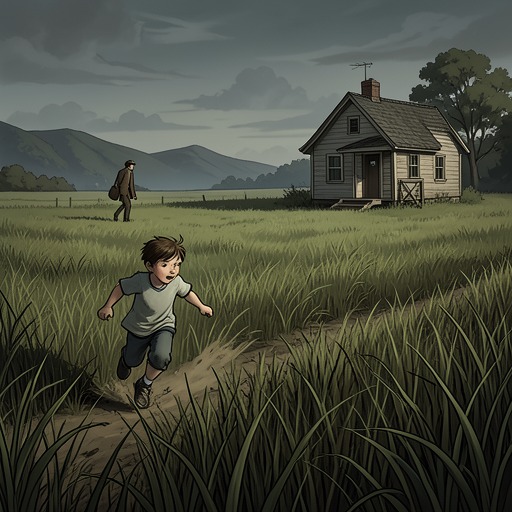
Maggie also brought that hospitality out to the family home. She cycled there on Wednesdays, the half-day closing in town, carrying sweets and biscuits from the shop; the children looked forward to her visits and felt disappointed when rain kept her away. Uncle Pat sometimes arrived unexpectedly in his large car when a hackney run took him near Carrigallen. These visits were part of a wider pattern of neighbours and relatives dropping in, but Maggie’s regular midweek arrival gave the children a particular pleasure to anticipate.
A sister’s help and the children’s education
Maggie and her sister Susan had long-standing ties of mutual assistance. When Susan won a scholarship and boarded at the Marist Convent in Carrick-on-Shannon, her family struggled to meet expenses the scholarship did not cover, but bore the cost without complaint. Once Susan began teaching, she helped Maggie and Uncle Pat establish themselves in Ballinamore. The three siblings lived together for years in the rooms above the High Street shop, beside the railway station, before Susan married. Later, when Susan had moved to Aughawillan, their father suspected she was still giving Maggie and Pat money. The narrator says that suspicion was mistaken: by then Maggie and Pat were helping Susan.
Maggie’s support extended to the next generation. She took responsibility for Margaret, the narrator’s younger sister, and Monica during their first year of secondary school, keeping them at her own expense despite the strain this caused her. By then she had recently married Michael Breen, a boilermaker employed in the railway sheds. Her decision to keep the girls and send them to school despite his opposition reveals the cost, as well as the resolve, of her generosity. Their father eventually took them away after making additional demands Maggie refused to meet. The girls were bright, but their access to further education remained uncertain; the narrator believes his father was shamed into sending them to the convent in Boyle.
Maggie’s assistance became urgent again when Margaret needed medical care. While Margaret waited for a place at Blanchardstown Hospital, Maggie and Uncle Pat drove to Grevisk and took her to Ballinamore. She stayed happily in the shop facing the closed railway line and station until a place became available. Her father did not visit during the wait or during the six months Margaret spent in hospital, where she was eventually cured. Maggie’s home thus offered more than temporary shelter: at a moment when her niece’s own father stayed away, it supplied a stable place to wait and recover.
Marriage, household, and independence
Michael Breen’s ambitions and Maggie’s established household did not sit easily together. A talented golfer who had caddied as a boy, he played in major amateur championships and was drawn to wealthy and powerful people. After a day on the golf course and an evening in the club bar, he resented having to put on his boilermaker’s suit the next morning. He had married Maggie believing she was younger and wealthier than she was, and the sideboard in their living room became a display of silver golfing trophies.
He also resented the lodgers and Uncle Pat, and before long the house was cleared. When Michael, tipsy one evening, insulted Pat, Pat rose, took out his key, and threw it on the floor without a word. He collected his clothes and left through the hall door for a house he had already bought beside his garage; a boy who worked odd jobs there later collected the rest of his belongings. When Pat subsequently saw Michael, he spoke as if nothing had happened, but did not enter the house again for years. Maggie remained infatuated with her husband, yet continued to keep Margaret and Monica for a year and to send them to secondary school against his wishes. The account holds these facts together without presenting her loyalty to her husband as surrender of her own judgment.
Defiance and family solidarity
Maggie’s independence also appears in her response to the local library’s removal of the narrator’s novel, The Barracks, as unfit for public consumption. The library committee, under priestly influence, took the book off the shelves. The librarian, Mrs McCarthy, quietly loaned it from beneath the counter, while Maggie responded openly: furious at its removal, she told a young priest who frequented her shop to take his custom elsewhere until the novel was restored. Her protest turns the shop into a place where religious authority can be challenged in ordinary, public terms. She does not merely sympathize with the writer; she uses the influence she has as a shopkeeper to make her dissent unmistakable.
That same independence marks her response to her father-in-law’s visit during her final illness. Maggie had developed the cancer that had killed Susan and was being treated at St Luke’s in Dublin. The narrator visited her often. Their father, who had long resented Maggie, travelled to the hospital dressed in his most sombre clothes and stood at the foot of her bed to say, “Margaret, not my will but thine be done.” He had left before the narrator arrived. Maggie was distraught and needed several minutes before she could explain what had happened; she recalled telling him to buzz off, or something like it, before he turned and left.
The narrator stayed until she had calmed enough to laugh. They often mimicked their father together, turning his self-pitying manner into shared comedy. The narrator contrasts his theatrical visit to Maggie with his refusal to visit his dying wife, attend his children’s weddings, or see Margaret during her months in hospital. When he challenged him over the visit, he treated the confrontation as further evidence of ingratitude and of the narrator’s loyalty to his mother’s relatives. Maggie’s alliance with the narrator is therefore intimate, but also part of the larger conflict between those relatives and their father.
Death and narrative significance
Maggie did not live long after leaving hospital. She died above the shop, the place where she had built her working and family life. When the news came, the narrator hired a car and drove to Ballinamore with Margaret and Dympna. Their father’s immediate concern during the removal of the body from the house to the church was that the narrator should return with him to Grevisk instead of staying with his mother’s relatives. The narrator would have preferred to remain in town, but went back to please his sisters.
At Maggie’s house and during the church ceremonies, the narrator remained coldly polite to his father, still angry about the hospital visit. Back in Grevisk, the father began a violent tirade against the narrator, Maggie, and the rest of the family. The narrator eventually told him to stop. Maggie’s death thus does not end her influence: her care, courage, and kinship continue to shape the narrator’s loyalties and his resistance to his father. Across the memoir, the shop is more than a picturesque railway-side setting. It is a recurring place of welcome, material help, and independent judgment, kept open by a woman who repeatedly turns affection into practical protection.